
What Is the Dark Web? A Plain-English Guide
The "dark web" sounds like something from a hacker movie — glowing screens, anonymous villains, hidden markets. The reality is more interesting and a lot less dramatic. In this guide, you will learn what the dark web actually is, how the technology behind it works, and what you should really worry about (hint: not the technology itself).
Three layers of the internet
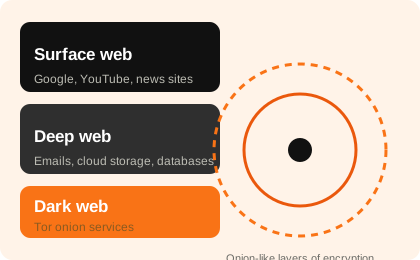
People often confuse the deep web and the dark web. They are not the same thing. The best way to understand the dark web is to see where it sits in the wider internet:
- Surface web: everything search engines index — news sites, YouTube, Wikipedia. Only about 4–5% of the internet by some estimates.
- Deep web: everything not indexed — your email inbox, online banking, cloud drives, private databases. This is the largest part of the internet, and every one of us uses it daily.
- Dark web: a small slice of the deep web that is only reachable with special software like the Tor browser. It hides both the visitor and the site.
So the deep web is big and normal, while the dark web is small and special. If you want the details of this distinction, read our comparison: Deep web vs dark web: what's the difference?
How the dark web works: onion routing
The dark web mostly runs on the Tor network, developed originally at a US Navy research lab in the 1990s and now maintained by the nonprofit Tor Project. The core idea is called onion routing:
- Your traffic is encrypted in three layers and bounced through three volunteer-run relays in different countries.
- Each relay peels off one layer, like an onion, and forwards the rest.
- Only the final relay sees the destination — and it does not know who sent the request.
The result: no single relay knows both where the traffic came from and where it is going. Sites on the dark web use hidden onion addresses (ending in .onion) that only work inside the Tor network. You can read more about these in our Tor browser guide.
Why do people use the dark web?
Popular culture focuses on crime, but legitimate uses are common and important:
- Journalists and sources — whistleblowers share documents anonymously with outlets like The New York Times through SecureDrop onion addresses.
- Activists in restrictive countries — in regions with censorship or surveillance, Tor lets people access the open internet without being tracked.
- Privacy-minded individuals — reporters, lawyers, medical workers, and ordinary people who prefer not to be profiled online.
- Researchers — academics and security professionals monitor the darknet to understand cybercrime. See our article on dark web research.
Yes, some parts of the dark web host illegal markets, stolen data, and fraud services. That activity is illegal and law enforcement actively prosecutes it — which is one reason those markets constantly collapse and reappear. In 2022, German authorities shut down Hydra, one of the largest illegal markets, seizing servers and criminal profits. In 2024–2025, law enforcement from multiple countries dismantled other major cybercrime operations and took down their infrastructure.
Is the dark web dangerous?
Using the Tor browser to visit well-known onion sites is, for most people, technically low-risk. The real dangers are four:
- Scams. Illegal darknet markets are full of exit scams — sellers or operators disappear with buyers' money. There is no consumer protection and no refund policy. Being scammed there is nearly impossible to reverse.
- Malware. Some onion sites serve malicious files, fake tools, or drive-by downloads. Stay on reputable sites only.
- Your own mistakes. Logging into Facebook on Tor, opening documents with tracking beacons, or reusing usernames can reveal your identity.
- Legal risk. The technology is legal, but buying illegal goods or services is a serious crime with serious penalties in both the US and the EU.
Honest warning
If you only take one thing from this guide, take this: the biggest risk on the dark web is not the technology — it is the people on it. Treat every stranger, every deal, and every "too good to be true" offer with deep suspicion. Read our guide on dark web scams before going anywhere near a market forum.
Common myths about the dark web
| Myth | Reality |
|---|---|
| "The dark web is a huge place" | It is tiny — by most measurements under 0.01% of web content, with only a few tens of thousands of active onion sites. |
| "Everything there is illegal" | Most onion sites are mundane: forums, archives, mirrored news, and privacy tools. |
| "Tor makes you 100% anonymous" | No. Anonymity depends on habits and threat model, not just software. |
| "Only criminals browse it" | Journalists, activists, researchers, and curious privacy users browse it daily, and Tor is used millions of times each day. |
Should you go there?
That is up to you. Browsing the dark web out of curiosity, with the Tor browser and the safety habits described on this site, is legal and often educational. Just remember the ground rules:
- Never log into personal accounts while on Tor.
- Never download or open files from strangers.
- Never buy anything from anonymous sellers — you will likely be scammed, and you may break the law.
- Keep your operating system and antivirus updated.
- If you want better privacy for everyday browsing, learn about VPNs and what they actually do.
Frequently asked questions
Is it illegal to visit the dark web?
No. In the US and EU, accessing Tor or onion sites is legal. Crime happens on it, but browsing is not a crime. Always follow your local laws.
Do I need a VPN to use Tor?
No, and the Tor Project itself advises against VPNs on top of Tor unless you know exactly why you need it. A VPN mostly adds complexity and a new party that sees your traffic.
Can police find me on the dark web?
Someone who carefully uses Tor, never logs into personal accounts, and does not commit crimes in your local jurisdiction is extremely difficult to track. People who get caught almost always slip up through poor habits or participate in illegal activity.
Further reading: Dark web (Wikipedia) · Onion routing (Wikipedia) · Tor Project · EFF

